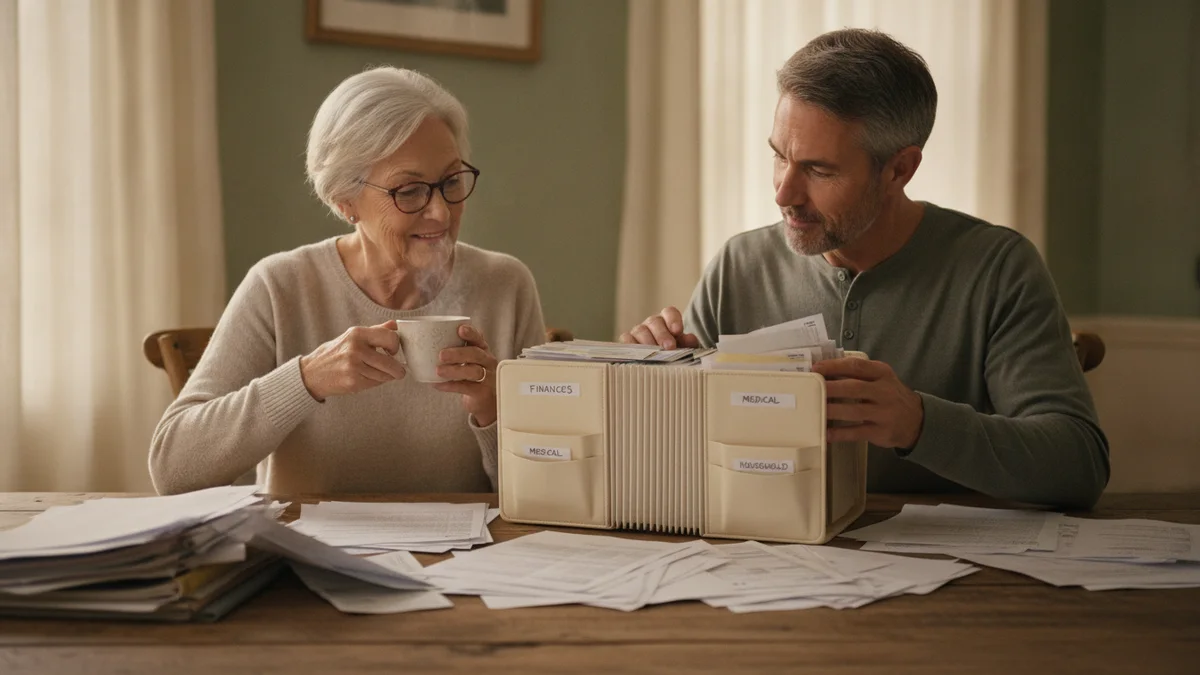
Why “affairs in order” is really a kindness project
Families put paperwork off because the phrase sounds like an ending. Most of the time, what this list gets used for is a temporary setback: a week in the hospital, a storm, a lost wallet. Someone needs to pay the electric bill or talk to the pharmacy, and needs to know where things are.
Go at your parent's pace. Offer to sort things with them, or just to note where everything lives without reading a page. For the wider picture of care, pair this with the caregiving checklist for aging parents.
This isn't legal or financial advice; estate documents and beneficiary rules vary by state. Use a qualified professional for drafting or major changes.
How to begin the conversation
If the word “documents” freezes the room, borrow the approach from our guide to talking with a parent about sharing finances: make it about your worry and ask for the smallest thing.
One way to open:
“I want to be useful if you ever need someone to stand in for a week. Could we make a simple map of where the important papers live, and who you'd want me to call?”
It helps to go first: tell them where your own emergency packet is, or admit you don't have one yet either.
The checklist
A. Identity and essentials
B. Legal and decision-making
One thing to check: a printed form is not a signed one. A power of attorney only counts once it has been executed the way your state requires, so confirm that step happened.
C. Money map (names and institutions first)
You don't need balances on day one, just a map of which doors exist so nobody has to guess in a hard week. Keep the family's scam rules next to this map: how scams that target parents work.
D. Insurance and benefits
E. Property and household
F. Digital life
Getting into someone's accounts without asking is not help, however well meant. Write the wishes down now, while nobody is upset.
Where should documents live?
| Approach | Pros | Watch-outs |
|---|
| Fireproof box at home | Fast in a local emergency | Tell someone trusted where it is |
| Safe deposit box | Secure | Access can be delayed; keys and authorization matter |
| Attorney holds originals | Professional custody | Keep a note at home saying so |
| Encrypted digital vault | Shareable from a distance | Needs a recovery plan and clear permissions |
| Hybrid (index at home, originals split) | Works for many families | Keep the index updated |
A one-page index (“Will: attorney Smith. POA: blue binder. Medicare: wallet, copy on fridge.”) is often worth more than a perfect archive nobody can find.
Family process checklist
For who does what across siblings: sibling caregiving roles without a fight.
Where FamSteady fits
Section C is the part FamSteady can help keep current. Your parent connects their own bank through a read-only link that cannot move money, and the family hears about anything worth a look. They control what is shared and can disconnect anytime. Join the waitlist at famsteady.com.
What is the minimum “affairs in order” set for a family?
Know where the photo ID, insurance cards, and medication list are, whether a will and powers of attorney exist and where, which institutions handle the bills, and who to call first in a short emergency. That covers most of the panicked searching. Build out from there as fast as your parent is comfortable.
Do we need an attorney to start the checklist?
No. Writing down where things are and who to call is something a family can do on its own. You'll want an attorney to draft or update a will, trust, or power of attorney, or to check whether existing documents still match your parent's wishes and your state's rules. The inventory comes first.
Should adult children hold all the passwords?
Only if your parent offers them freely as part of a plan they chose. Most families start with institution names, advisor contacts, and a written emergency plan, which covers a great deal without any passwords. Taking passwords without asking breaks trust and can create legal problems later, even when the intention was good.
How is this different from estate planning?
Estate planning creates or updates legal documents with a professional's help. This checklist finds, organizes, and shares what already exists, and points out gaps to bring to a lawyer later. Most families eventually need both, but you can start organizing today without a lawyer's appointment on the calendar.
What if documents are outdated?
Write down the date and schedule a professional review. Old agents, beneficiaries, and state forms are common after moves, divorces, and deaths in the family. Don't assume a will signed twenty years ago still says what your parent would want now. Updating it is a routine piece of care.
Where should we keep digital copies?
In a tool your parent understands and has approved, with access limited to named people. Label files clearly and keep a one-page paper index alongside them, since paper is what someone grabs in a hurry. Don't let sensitive scans drift into text threads, where they are hard to take back.
Can we do this remotely if we live in another state?
Yes. Start with video calls and a shared index of where documents live. When something physical is needed, like a trip to the safe deposit box, a trusted local helper with your parent's authorization can handle it. Remote families do best with clear sibling roles and one shared set of notes.