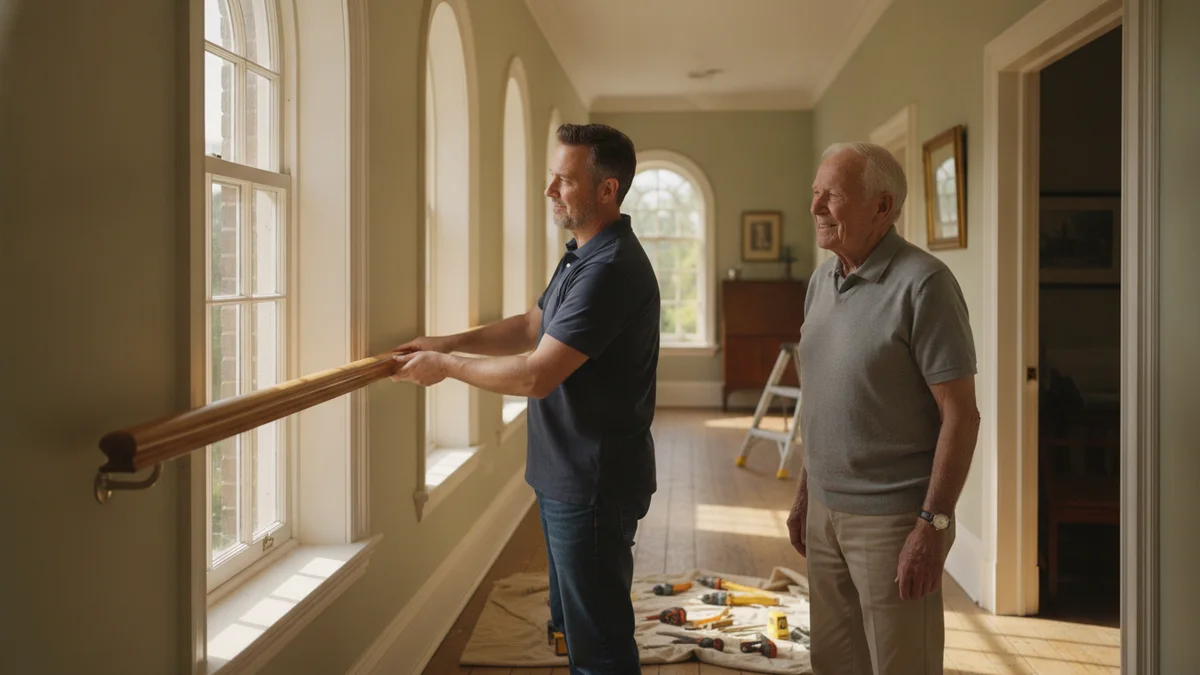
This checklist is written for families in the sandwich generation. It isn't medical, legal, or occupational-therapy advice. If your parent has a fall history or a complex mobility issue, bring in a clinician or a qualified home-assessment professional.
How to use this checklist
- Ask before you move anything in their house
- Offer choices (“a grab bar here, or a different rail style?”) instead of ultimatums
- Start with trip hazards and dark hallways; keep your opinions about the décor to yourself
- Write down what they turn down and revisit it later without making it a thing
- Get siblings on the same page so nobody becomes the family's safety inspector: sibling caregiving roles
These items fold into the broader caregiving checklist for aging parents.
1) Lighting and night paths
Picture the middle-of-the-night bathroom trip: dark room, half awake, in a hurry. That is where a lot of falls happen, and a night-light fixes most of it. Better light is nice for everyone who visits, which makes it an easy first ask.
2) Floors, rugs, and walkways
If your parent's walk has slowed, fix the house and also mention it at the next appointment: when a slowing walk is worth mentioning to a doctor.
3) Stairs and entries
4) Bathroom comfort and fall reduction
Of everything on this list, bathroom changes prevent the most harm for the least fuss.
5) Kitchen and daily living
6) Emergency readiness
If you live far away, agree in advance how you'll hear about problems with the house, so nobody feels checked up on. See long-distance check-ins without nagging.
Priority matrix (do these first)
| Priority | Examples | Why first |
|---|
| High | Night-path lighting, loose rugs, bathroom grab bars, smoke and CO detectors | Prevent the most common serious injuries |
| Medium | Stair contrast, kitchen reach zones, exterior lighting | Reduce everyday friction |
| Later or optional | Remodels for looks, gadgets they don't want | Taste and budget, after the basics |
Room-walk checklist (print or screenshot)
| Area | Look for | Done? |
|---|
| Bedroom | Clear path, lamp reach, phone/charger | ☐ |
| Hall | Clutter, cords, night-lights | ☐ |
| Bathroom | Grab bars, slip risk, reach | ☐ |
| Stairs | Rails, clutter, visibility | ☐ |
| Kitchen | Reach, detectors, clear floor | ☐ |
| Entry | Steps, lighting, packages | ☐ |
| Living | Rugs, ottomans in paths | ☐ |
Where FamSteady fits
Home safety is about the house; FamSteady covers the part you can't see between visits. Your parent can choose to share step, sleep, and heart rate rhythms from their iPhone, and the family hears in plain words when a pattern shifts. No cameras, microphones, or location tracking, and your parent can disconnect anytime. Join the waitlist at famsteady.com.
What should be on a home safety checklist for aging parents?
Light on the paths people walk at night, clear walkways, rugs that don't slide, sturdy rails, grab bars and non-slip surfaces in the bathroom, working smoke and carbon monoxide detectors, and an emergency contact plan. Walk the house with your parent and treat each change as a comfort upgrade. Bring in a professional for a fall history or a complex mobility issue.
How do I bring up home safety without insulting my parent?
Frame it as making the house easier for everyone, including guests who get up at night, and start with lighting and clutter rather than anything that implies frailty. Give them real choices about style and placement. When they say “not yet” to a bigger change, take it and ask again in a few months. “What would feel more comfortable?” opens more doors than an inspection.
Do we need cameras for home safety?
No. Most of the improvement comes from lighting, clear paths, grab bars, and detectors, none of which involves a camera. FamSteady doesn't use cameras, microphones, or location tracking either. If your parent wants a camera for their own reasons, that is their choice to make, and it should come from them.
What are the highest-impact low-cost fixes?
Night-path lighting, removing or securing throw rugs, clearing cords, testing smoke and carbon monoxide detectors, and grab bars anchored properly into the wall. Together they cost less than most gadgets and do more. Start with the places your parent walks in the dark, where urgency and poor visibility do the most damage.
Should we do a full remodel before a fall happens?
Not necessarily. Targeted fixes, plus a clinician's input after a near-fall or a change in mobility, are enough for most homes. A remodel makes sense when your parent wants one and the budget allows. Avoid a panicked renovation that turns a house they love into a place that no longer feels like theirs.
How often should we recheck the house?
After a fall or near-fall, after a hospital stay, whenever mobility changes, and at least once a year regardless. Seasons change the risk too: ice at the entry in winter, glare in summer, clutter around the holidays. A short annual walk-through with this list in hand is easy to keep up.
Is this professional safety advice?
No. It's a family checklist meant to help you get started. For a fall-prevention plan built around your parent, ask their doctor, a physical or occupational therapist, or a certified home-safety assessor. That matters most after repeated falls or a big change in mobility, when the risks have outgrown a trip to the hardware store.